Learning from a mentor: Reflections on a 50-year career in education (Online&Classroom)
Speaker: Dr Stephen Rayner
Deputy Head of the Manchester Institute of Education
Host: Luman Zhou
PhD Candidate, University of Manchester
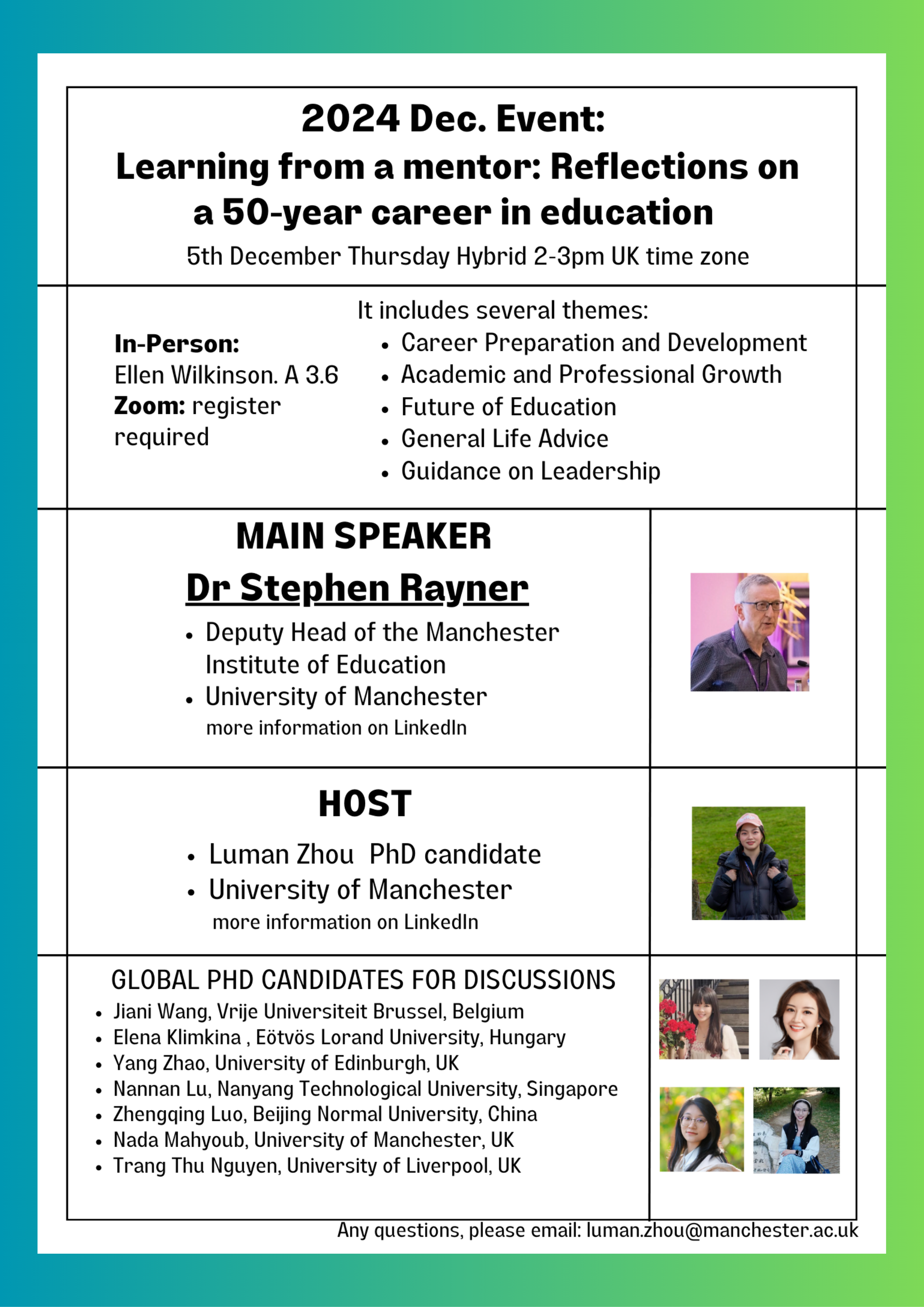
2024 December 5th Event: Learning from a mentor: Reflections on a 50-year career in education (Online&Classroom)


Date: 2024.12.05
Introduction

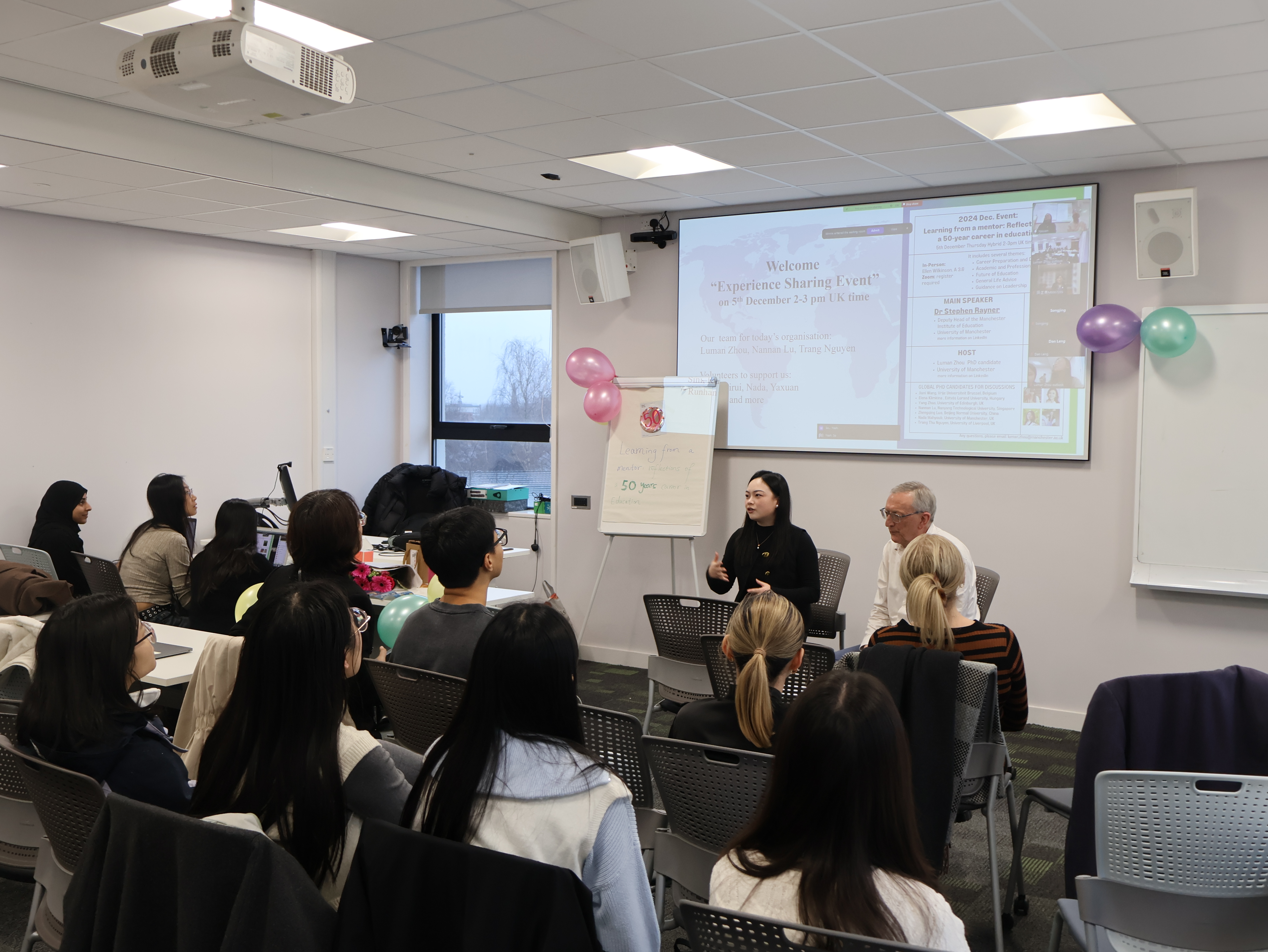
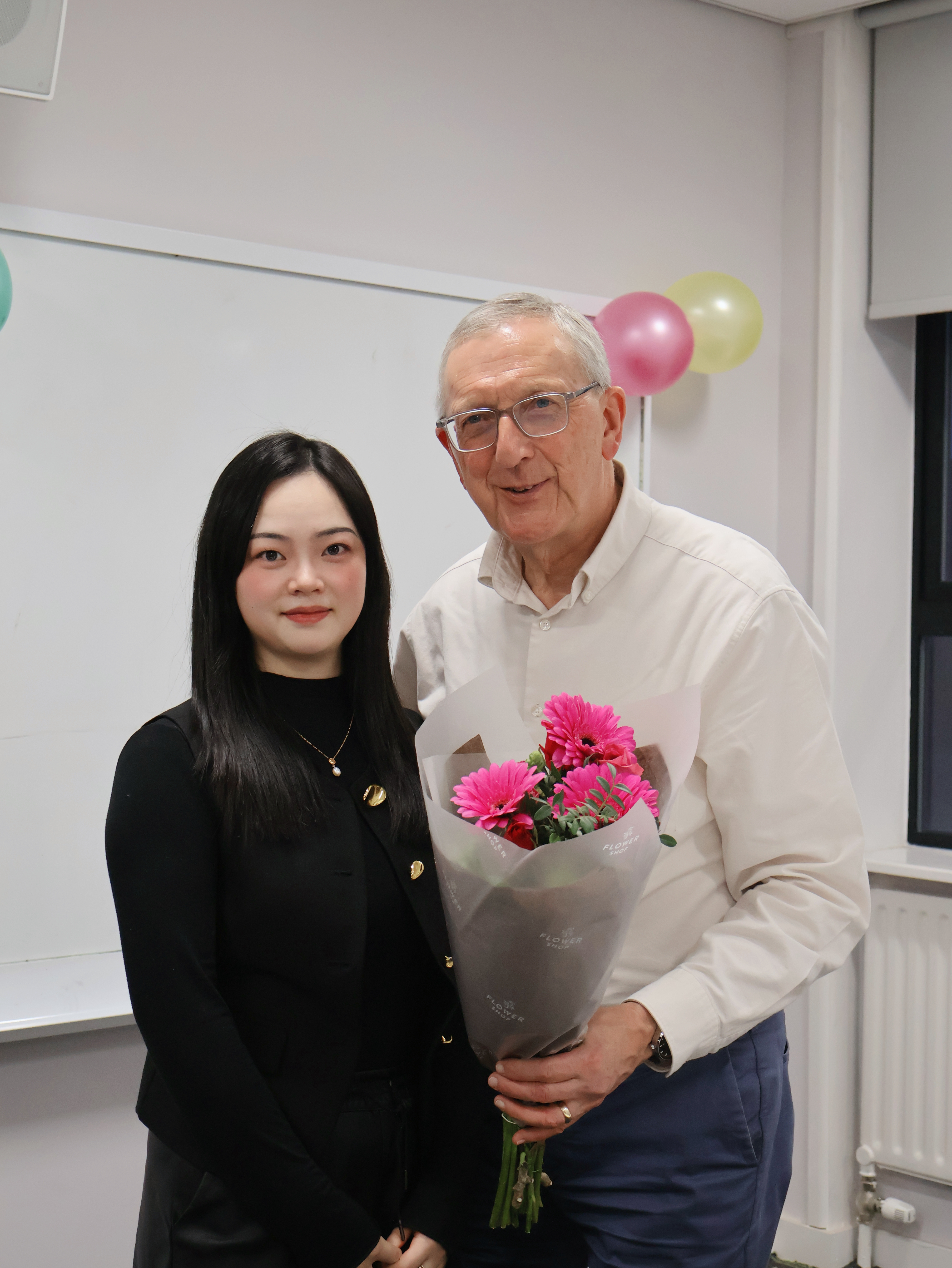
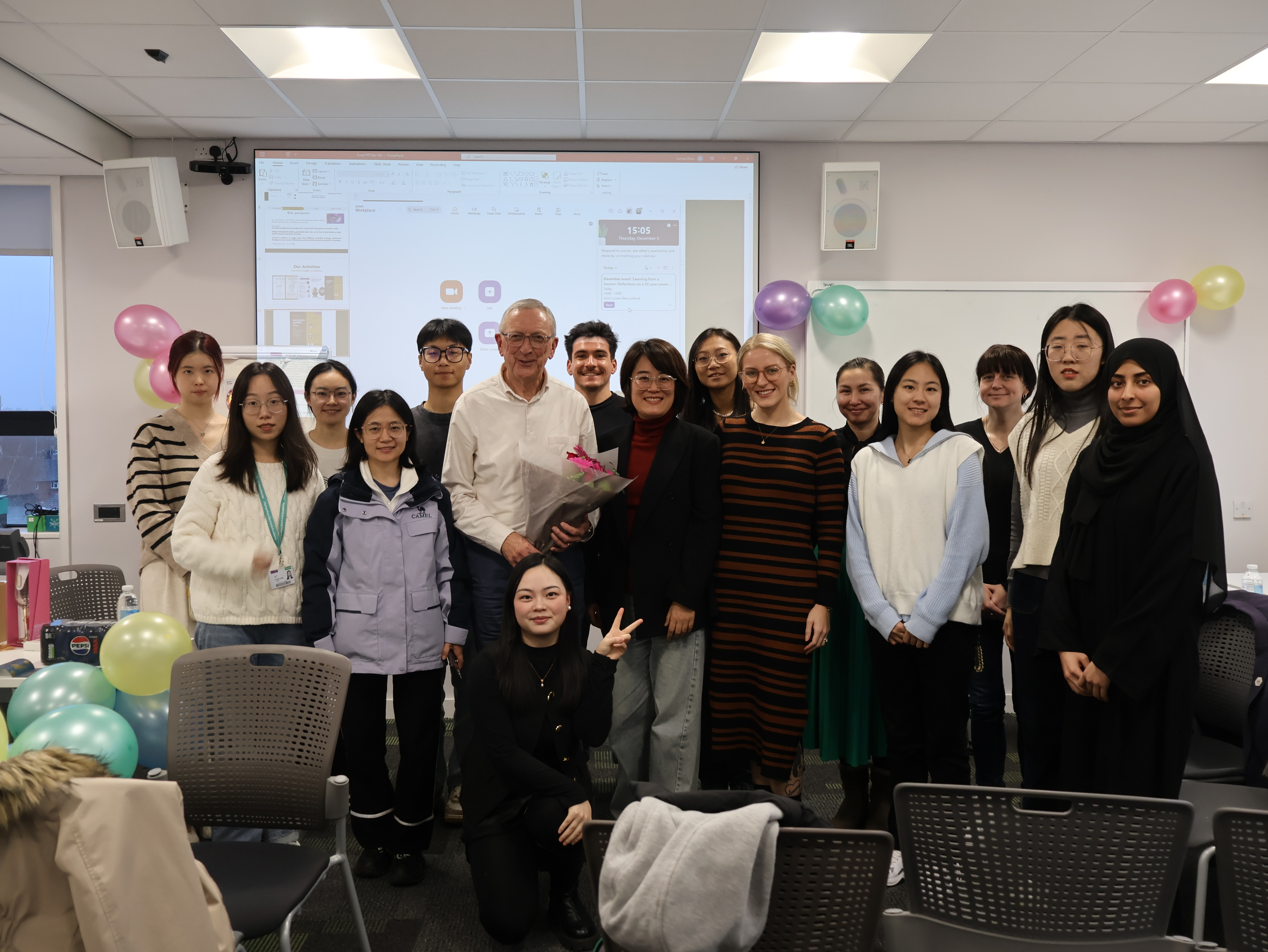
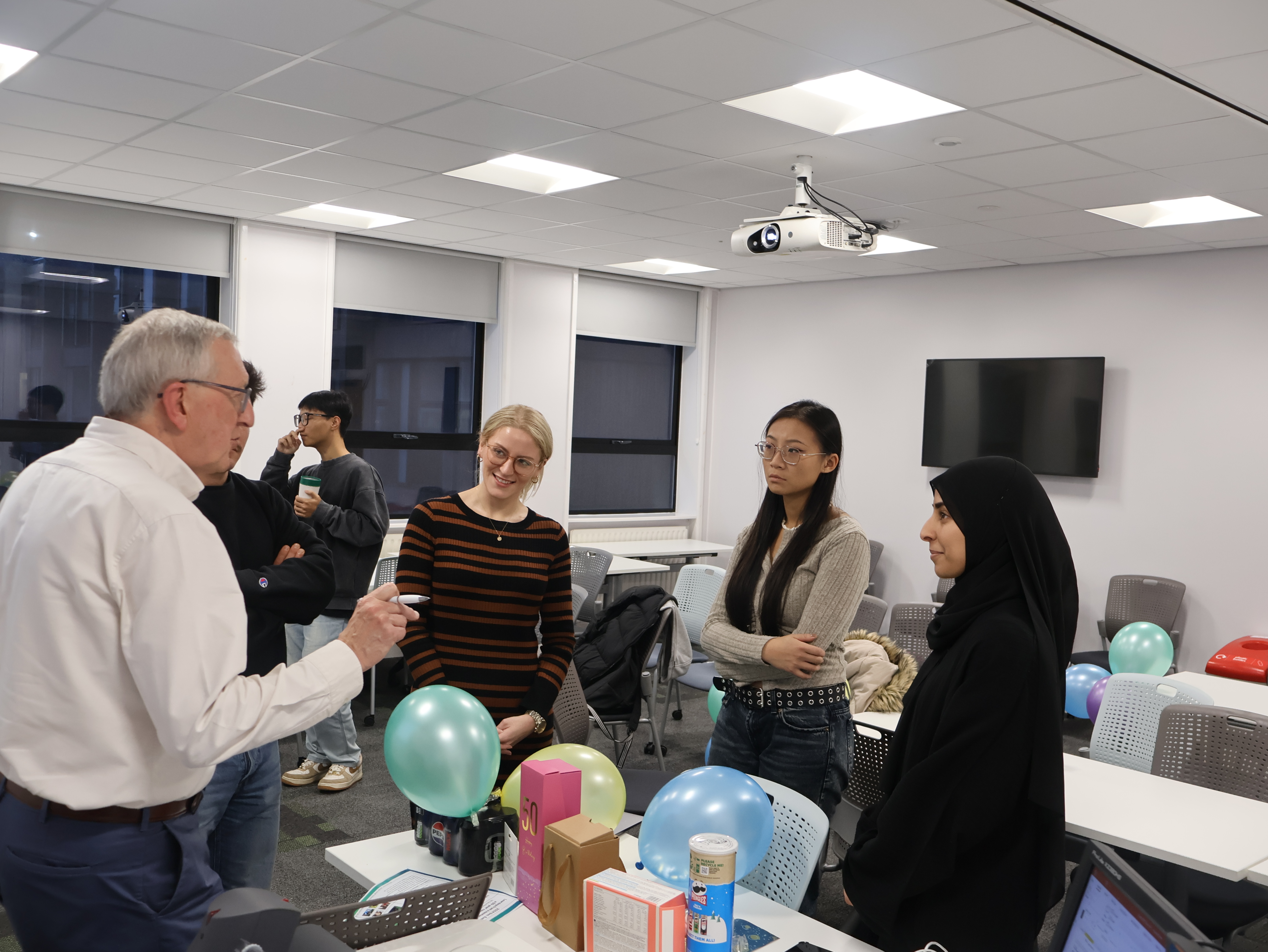
On Thursday afternoon, Luman Zhou (a host) and Dr Stephen Rayner is Deputy Head of the Manchester Institute of Education engaged in a profound and inspiring discussion, reflecting on a remarkable 50-year career in education. The event brought together over 60 participants, both online and in-person, representing diverse universities and countries.
The session received overwhelmingly positive feedback from attendees and peers. Many praised the event for its high quality and the wealth of knowledge it shared, describing it as inspiring and insightful. This experience-sharing event left participants enriched and motivated, highlighting the enduring impact of a lifelong dedication to education.
We keep the host’s original questions, Stephen’s responses, and the key takeaways:
Question 1
“How should students approach networking and building professional relationships in the education sector?”
Stephen’s Response (Original):
“I can’t improve very much on what you’re doing here because that net you’ve called it networking, and it can be formal, or it can be informal. You’ve got a mixture of the two here. You have a structure to what we’re doing here. You have a structure to your global network. And one of the words that you used as a prompt here was about organization. And I just think having the organizational skills to make things happen, because a lot of people have great ideas, wouldn’t it be good to network more? But how will that happen? What you and your colleagues have done is to provide a structure for that.”
Key Takeaway:
Stephen highlights the importance of organizational skills in networking. Both formal and informal networks can thrive when given structure and purpose, enabling meaningful professional relationships.
Question 2
“How can students stay motivated and resilient in the face of challenges such as heavy workloads or career uncertainties?”
Stephen’s Response (Original):
“Those are two really big challenges for everyone. Actually, you don’t have to be a PhD student to face those two challenges. But I’ll look at it from that point of view. What am I going to do at the end of my PhD, especially if you’ve got friends who have an absolutely clear picture of what they’re going to do, that it’s all planned out? For me, it’s never been all planned out. Try not to get isolated, under either heading, trying not to feel that it’s just you. Gaining emotional and practical support from colleagues is vital.”
Key Takeaway:
Stephen emphasizes the value of seeking support from colleagues and staying connected. Embracing flexibility and managing self-doubt can help students navigate heavy workloads and career uncertainties.
Question 3
“Reflecting on your career, what do you think are the most important lessons you have learned that students should keep in mind as they start their journeys?”
Stephen’s Response (Original):
“One of the lessons about my career is: expect the unexpected. I did not have a plan when I finished my undergraduate studies. Opportunities can arise from the most unexpected direction. Don’t assume that if things aren’t going well, they’ll always stay that way. I’ve learned that you need to stay adaptable and open to where life may lead you.”
Key Takeaway:
Stephen advises students to stay adaptable and open to unexpected opportunities. Careers don’t always follow a linear path, and setbacks often lead to new chances for growth.
Question 4
“How do you perceive the trends in the field of education from your eyes?”
Stephen’s Response (Original):
“Maybe they are moving more towards global understanding and sharing of experience across different settings. I taught in very diverse schools, but my CV was limited to the context of England. Since teaching at the university, I’ve had the privilege of learning from over 1,000 students from China and other countries. This has shown me the importance of understanding different contexts and learning from each other without assuming anyone has all the answers.”
Key Takeaway:
Stephen notes a trend toward global understanding and cross-cultural learning in education. Collaboration and context-sensitive approaches are becoming increasingly essential.
Question 5
“What do you find is the most fulfilling in your past educational career?”
Stephen’s Response (Original):
“I’m still occasionally contacted by former students, even from my school career, who I might come across. Being remembered is quite nice. I recently met with a former student working in Germany who contacted me for career advice. For me, it’s seeing students succeed and knowing I’ve made a difference in their lives.”
Key Takeaway:
Stephen finds fulfillment in being remembered by students and contributing to their growth and success. His pride lies in the positive impact he’s had on their journeys.
Inspirations & Reflections:
- Networking and Organizational Skills:
Stephen’s emphasis on structuring networking efforts is particularly inspiring. It highlights that intentional organization is key to making professional connections meaningful. For students or early career professionals, it’s a reminder that having a plan and structure is just as important as the connections themselves. Building a network is not about quantity, but about fostering real, productive relationships within a system or community. - Managing Career Uncertainty and Heavy Workloads:
Stephen’s advice on navigating workloads and career uncertainties speaks to the universal challenge of finding balance. His perspective encourages students to lean on support networks, whether through peers, mentors, or supervisors, which is often overlooked when dealing with the isolation that can come with intense academic work. His reminder to avoid isolation and seek help is especially important for doctoral students who can feel overwhelmed by the pressures of self-driven research. - Expecting the Unexpected:
The lesson to expect the unexpected and to stay adaptable is a powerful one. Stephen’s advice that careers aren’t linear encourages flexibility and openness to opportunities that might not align with initial plans. For many students, particularly those entering uncertain career paths, this advice is a reminder that detours or delays can lead to more rewarding experiences. Adaptability and resilience are key skills that should be nurtured. - Global Understanding in Education:
Stephen’s insight into the global trends in education reminds us that the future of learning and teaching is increasingly diverse. Understanding the global context of education and being open to cross-cultural learning not only broadens perspectives but enriches the entire field. This message resonates with students who are working in or studying education across international borders, encouraging them to learn from diverse educational contexts. - The Fulfillment in Mentorship and Teaching:
Stephen’s reflections on the joy of mentorship and his pride in seeing students succeed emphasize the fulfillment that comes from contributing to the growth of others. For anyone working in education, these reflections are a reminder of the long-term impact that teaching and mentoring can have. The satisfaction of seeing former students thrive, regardless of how much time has passed, serves as a powerful motivator for those in academic roles.
Feedback and Actionable Insights:
- Networking:
Actionable Insight: Start by organizing smaller, more focused groups or networks to build meaningful connections, especially for those in academia or early-career positions. Consider building virtual and local networks that focus on specific topics of interest or shared goals. - Handling Workload and Uncertainty:
Actionable Insight: When faced with academic pressure, focus on time management and regularly reassess priorities. It’s also important to practice self-care and reflect on personal limits to avoid burnout. Remember that peer support is invaluable, and staying connected with others who are facing similar challenges is crucial. - Staying Open to Unexpected Opportunities:
Actionable Insight: Embrace unexpected opportunities by maintaining a growth mindset. Whether it’s through serendipitous professional encounters or academic discoveries, keep an open mind and remain flexible in your career path. Sometimes, the best opportunities come from where you least expect them. - Learning from Global Contexts:
Actionable Insight: In today’s interconnected world, cross-cultural learning is essential. For students working in international education, exploring global trends, and being proactive in learning from diverse educational systems can significantly enhance the relevance of their research. - Mentorship Fulfillment:
Actionable Insight: For those in academic or professional roles, actively seek mentorship opportunities and reflect on the lasting impact it has. Regularly check in with former mentees or students to see their progress and offer continued support. This not only nurtures the next generation but also enhances your own sense of accomplishment.
Final Reflection:
Stephen’s advice offers timeless lessons not only for academic careers but also for personal development. Emphasizing networking, resilience, and openness to learning serves as a great reminder that academic and professional journeys are complex and ever-changing. The key is to embrace these challenges with confidence, knowing that growth often comes from unexpected paths.
Editor: Luman Zhou
Reviewer: Luman Zhou

 globalphdedu.com