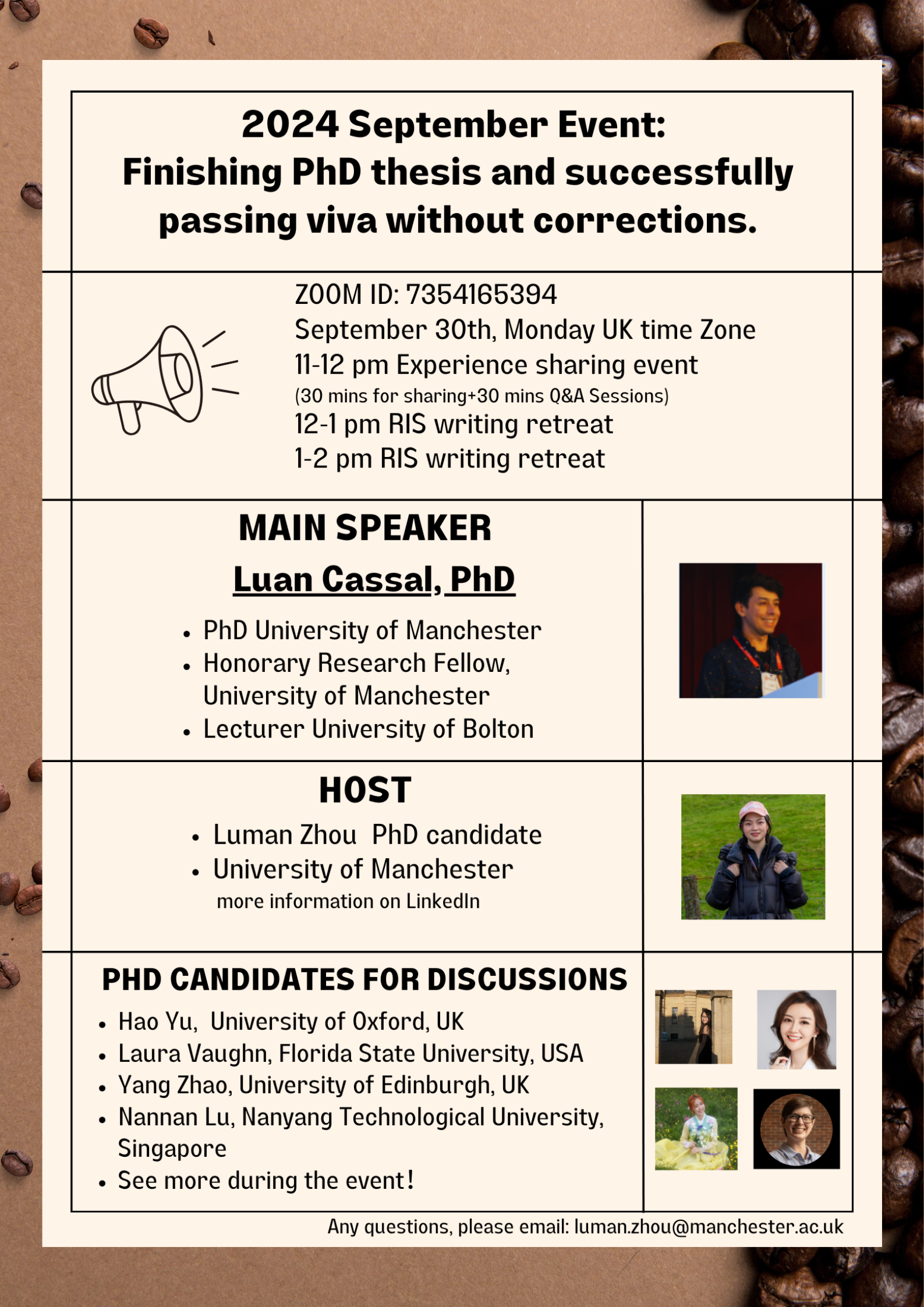
2024 September Event:
Finishing PhD Thesis and Successfully Passing Viva without Corrections (Online)
Speaker: Dr Luan Cassal, Honorary Research Fellow, University of Manchester
Host: Luman Zhou, PhD Candidate, University of Manchester
2024 September Event: Finishing PhD Thesis and Successfully Passing Viva without Corrections (Online)
2024 September Event: Finishing PhD Thesis and Successfully Passing Viva without Corrections (Online)
Speaker: Dr Luan Cassal, Honorary Research Fellow, University of Manchester
Host: Luman Zhou, PhD Candidate, University of Manchester
Date: 2024.9.30
Introduction: Luan Cassal, a PhD in education, shared valuable insights into the thesis writing process and his experiences throughout his doctoral journey. He highlighted the importance of organisation, motivation, and resilience, providing practical advice for fellow candidates.
1. Thesis Writing Process
Planning and Structure: Luan discussed his approach to planning and structuring his thesis (traditional format), which began with a down-to-up process; writing sections and chapters and then creating a detailed outline linking all chapters together. This served as a roadmap, helping him organize chapters in a coherent manner and ensuring that each section logically transitioned into the next. He emphasised that a clear structure not only aids in clarity for the reader but also provides the writer with a focused direction.
Motivation and Time Management: To maintain motivation, Luan recommended setting small, achievable goals. By breaking the writing process into manageable tasks, he found it less overwhelming. He advocated for a disciplined writing schedule that balances academic responsibilities with personal commitments, emphasizing effective time management as a cornerstone of a successful PhD journey. Also, engage in academic activities that can give you input into your work and help with your confidence (for instance, conferences and teaching on the field). Still, he pointed out the need for self-care, breaks, and social activities.
Handling Feedback: Luan highlighted the importance of actively engaging with supervisors to receive constructive feedback. He viewed feedback not as criticism but as a valuable tool for improvement. By incorporating suggestions early in the writing process, he minimized the need for extensive corrections later, fostering a collaborative relationship with his supervisors.
Final Submission Preparation: When preparing for submission, Luan stressed the necessity of thorough proofreading and peer reviews. He sought feedback from colleagues to refine his arguments and enhance clarity. His meticulous attention to detail ensured that his thesis was polished and ready for examination. He mentioned the challenges in the final weeks which nevertheless were worth it.
2. Dealing with Challenges
Moments of Doubt: Luan candidly shared his experiences with self-doubt and writer’s block, common challenges during the PhD journey. He emphasized the importance of seeking support from peers and mentors when faced with such hurdles. Maintaining a positive mindset and reminding oneself of the research’s purpose were key strategies for overcoming these obstacles, as well as activities to improve wellbeing.
Dealing with Critical Feedback: Addressing how he handled critical feedback and setbacks, Luan spoke about the need for resilience. He viewed criticism as constructive input that could enhance the quality of his research. By learning from feedback and adapting, he maintained momentum, continuing to progress despite challenges.
3. Passing Viva
Preparation for Viva: Luan shared his strategies for preparing for the viva, recommending mock presentations to practice articulating his research clearly and confidently. He stressed the importance of anticipating tough questions from examiners and preparing thoughtful responses as part of his preparation process. Also, the importance of resting before the viva and having support from peers.
Impressions on Examiners: He noted that key aspects that impressed examiners included his confidence and clarity during the presentation. Engaging with the examiners and demonstrating a deep understanding of his research topic were crucial for success. Luan encouraged candidates to view the viva as an opportunity to showcase their passion for their work.
Additional Resource:
🍓Luan recommended the website Viva Survivors (http://viva-survivors.com/) as a valuable resource for candidates preparing for their viva. The site offers practical tips and shared experiences to help navigate this critical phase.
For more information on Luan’s research, please refer to https://research.manchester.ac.uk/en/persons/luan-cassal
Editor:
Yaxuan Wang
Luman Zhou
One peer’s comment:
“Thank you so much for organising this event! It’s incredibly practical and valuable for PhD students to gain insights and knowledge from peers. The session was truly amazing, and I deeply appreciate the effort put into creating such an enriching experience.”
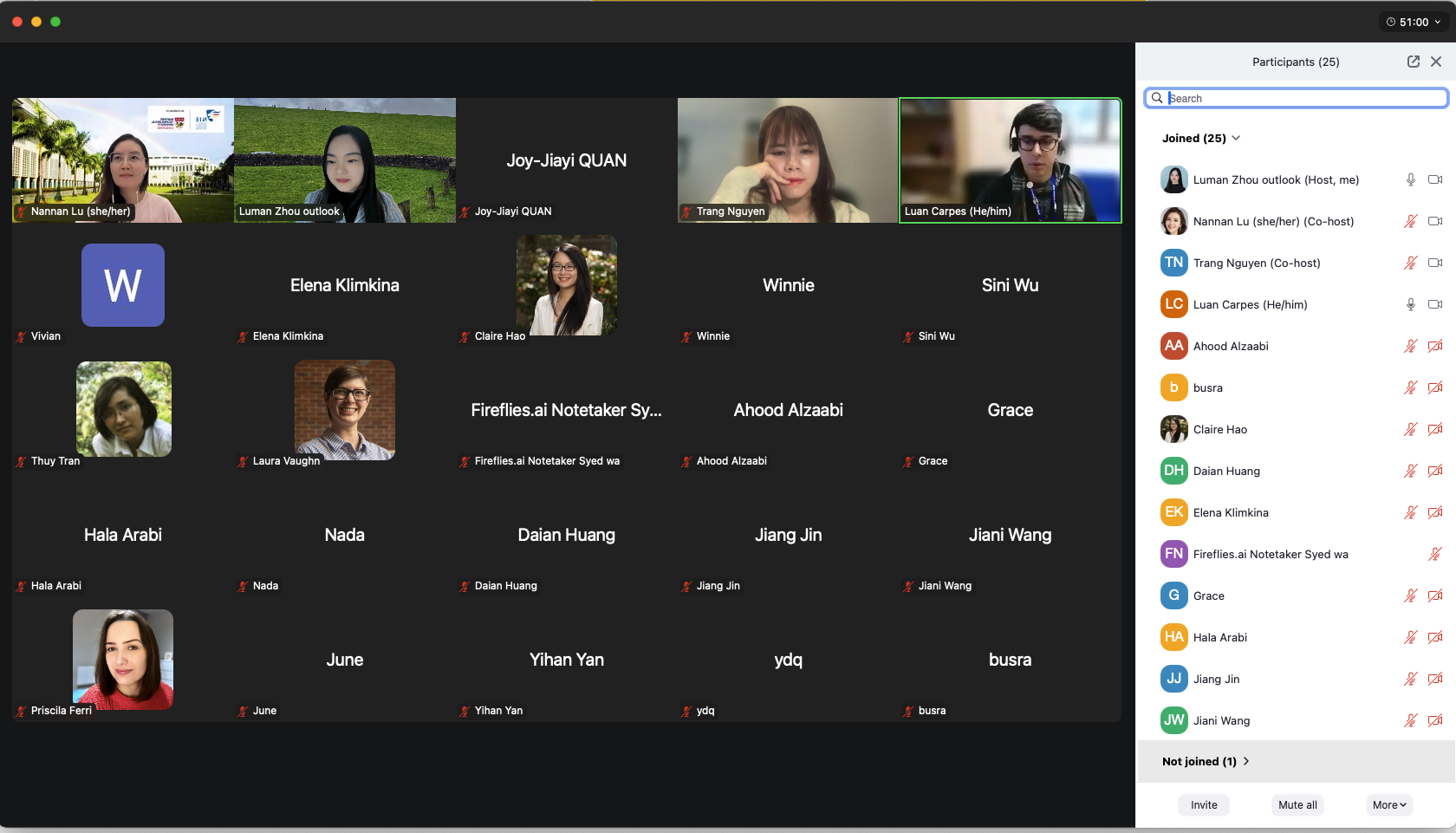
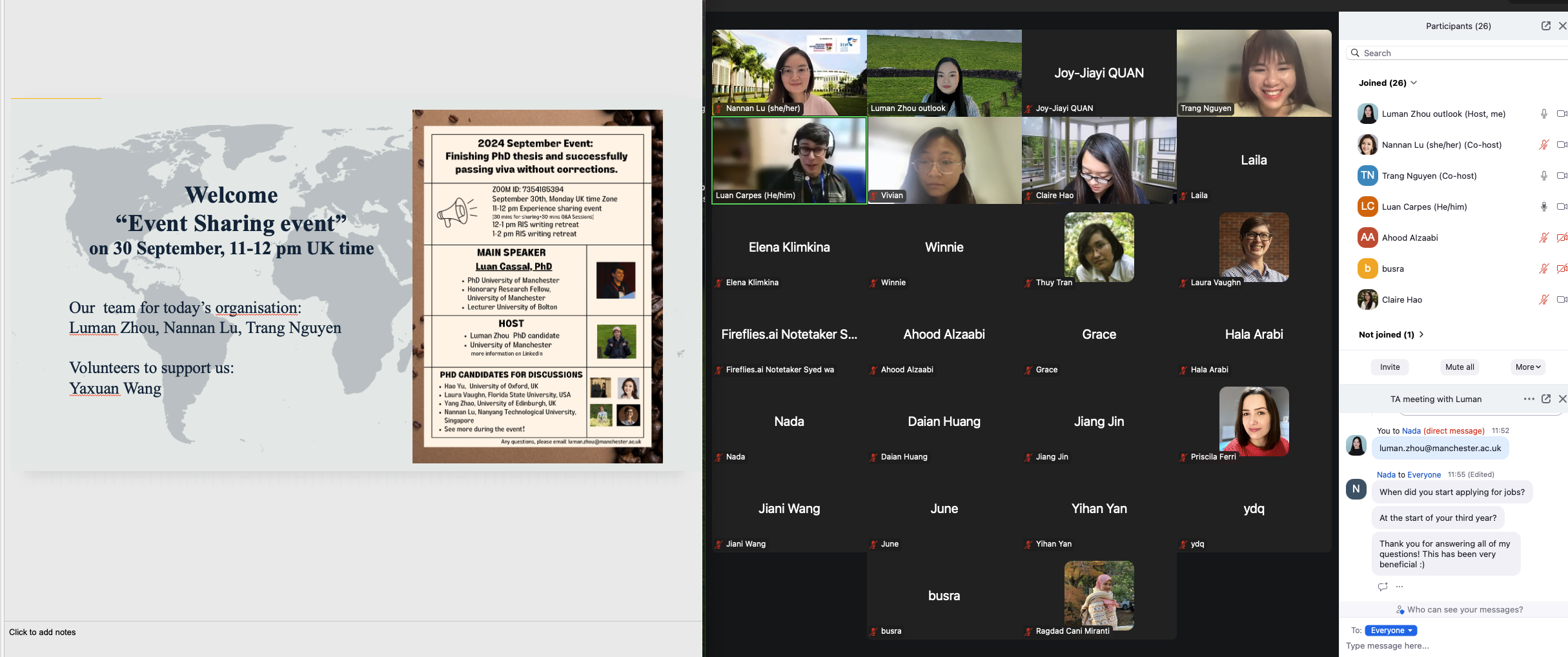
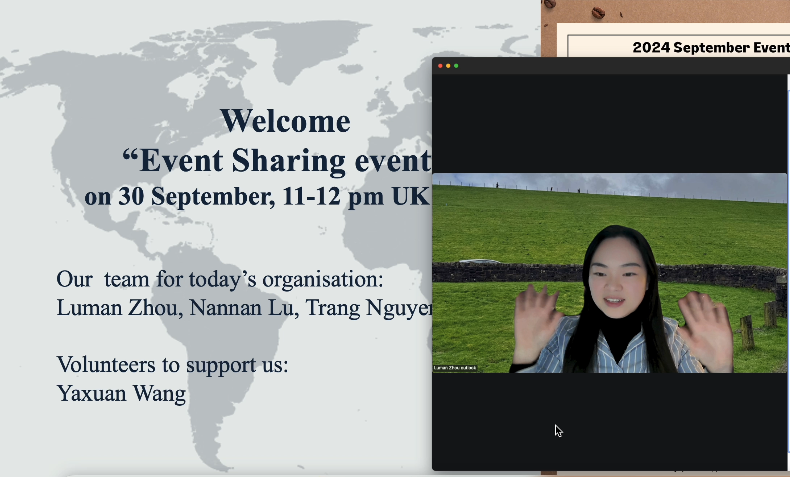
Photos of the Workshop
-
Our Website: https://globalphdedu.wordpress.com/
Our LinkedIn: https://www.linkedin.com/in/global-phd-network-in-education-9a151b331/
Our Wechat account: https://lnkd.in/e7iRRZAX -
Our Website: https://globalphdedu.wordpress.com/
Our LinkedIn: https://www.linkedin.com/in/global-phd-network-in-education-9a151b331/
Our Wechat account: https://lnkd.in/e7iRRZAX -
Our Website: https://globalphdedu.wordpress.com/
Our LinkedIn: https://www.linkedin.com/in/global-phd-network-in-education-9a151b331/
Our Wechat account: https://lnkd.in/e7iRRZAX
 globalphdedu.com